04 ULTRAVIOLET GARDENS
WRITING’ RESEARCH 2024/1
Ultraviolet
Gardens, is the thesis book I presented to the
University of Waterloo in fulfilment of the thesis requirement for the degree
of Master of Architecture.
It was important to me, to avoid the rootedness of architectural sites, their boundaries and edges. I had a few options. I could center myself somewhere and in the way of Deleuze and Guattari, branch out from there, like a rhizome. I could create a mosaic of many places, in many times. Or I could focus on greenness, through its most obvious visual characteristic: the colour green. In doing so I could tie greenness to vision, and through vision to photography.
Before addressing how we live, how we build, how we act, how we exist, in place or on site, I needed to speak to how we viewed it. Ultimately, greenness, as proposed in this thesis, is an acknowledgment of the material relations that shape and link plant-life to their Umwelt*. This thesis is a statement on how‘green’ exists solely as color, which has rendered our understanding of it banal. This thesis is also a counterstatement; an exploration into the ways greenness can be re-envisioned beyond the semiotics of green.
ABSTRACT
We live in a world shrouded in greenness. A world made of places, of
places made of sites, of sites which make the landscape. I speak to all current and latent gardeners; to all of those unaware, yet fascinated by green.
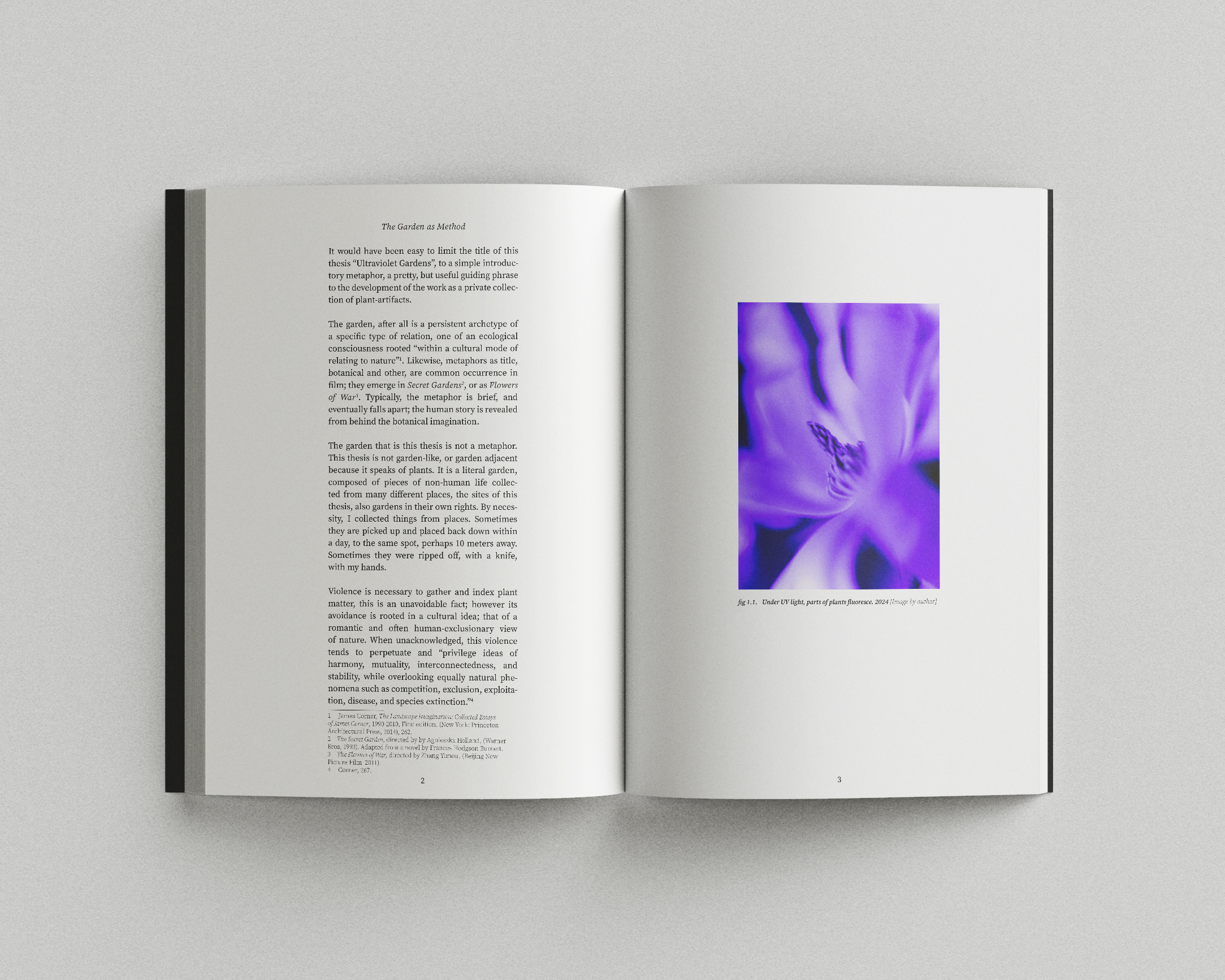
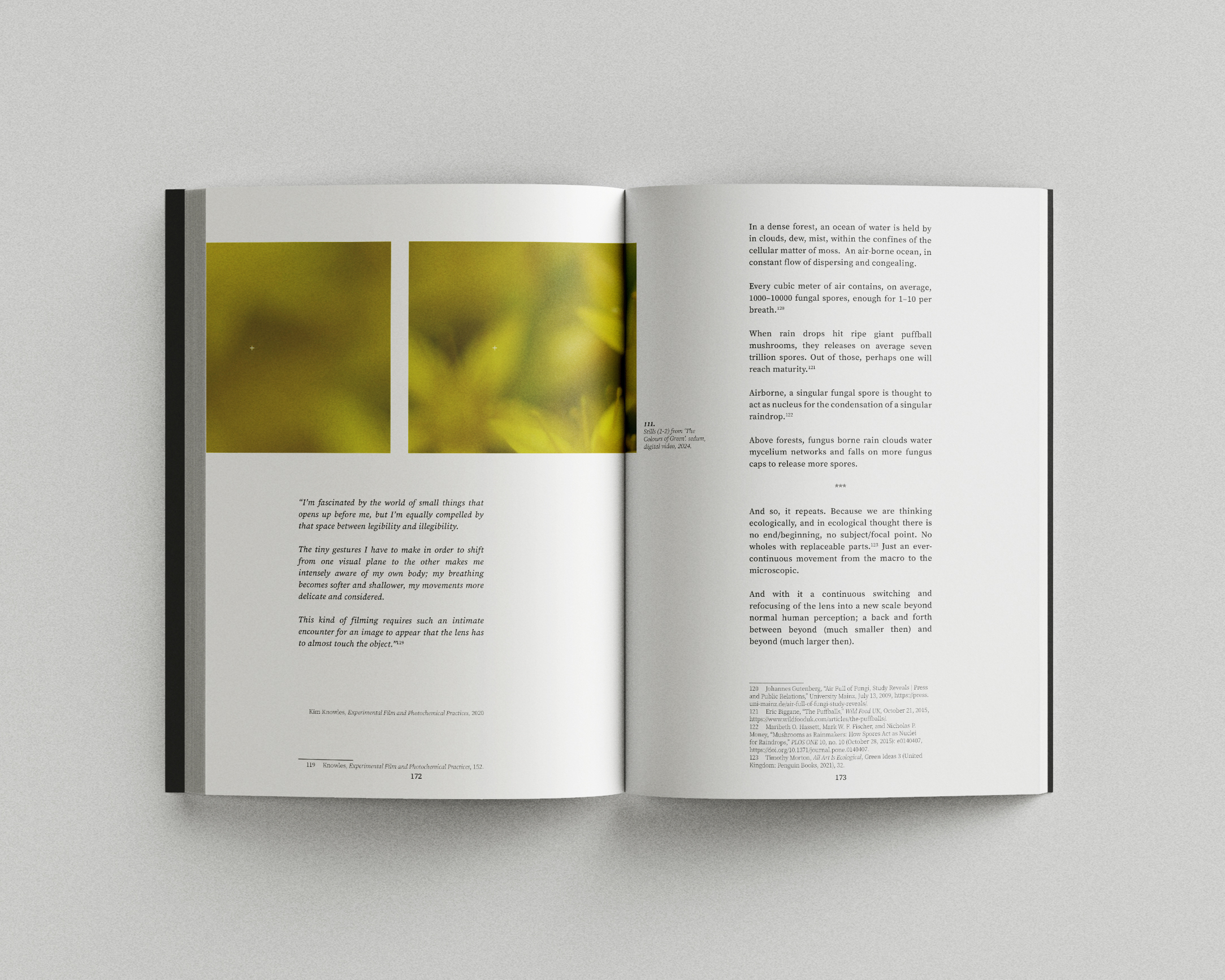
Ultraviolet Gardens invites you into a photographic garden; a reframing of how ‘green’ has been, can be, seen and rediscovered; to find greenness within plastic plants, fuzzy chlorophyll, and the illusions of green.
Within ultraviolet gardens, the banal and mundane are estranged, and as such made visible. With film and photo making, I share the strange dimensions of greenness that arise in familiar places.
Central to the argument is that a rediscovery of green must happen first by estrangement of the body, of both the external optics of vision and the internal perceptions of the mind.
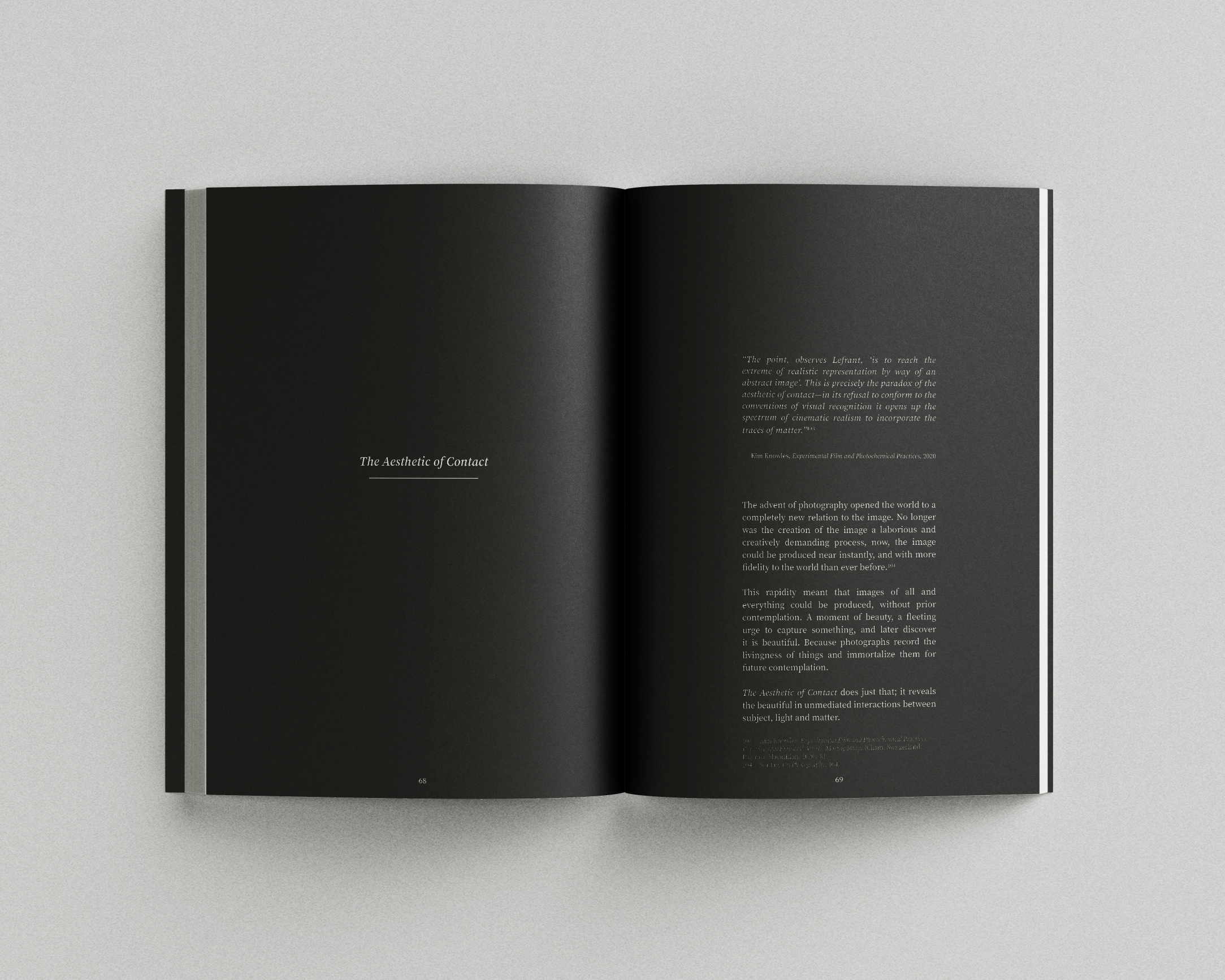
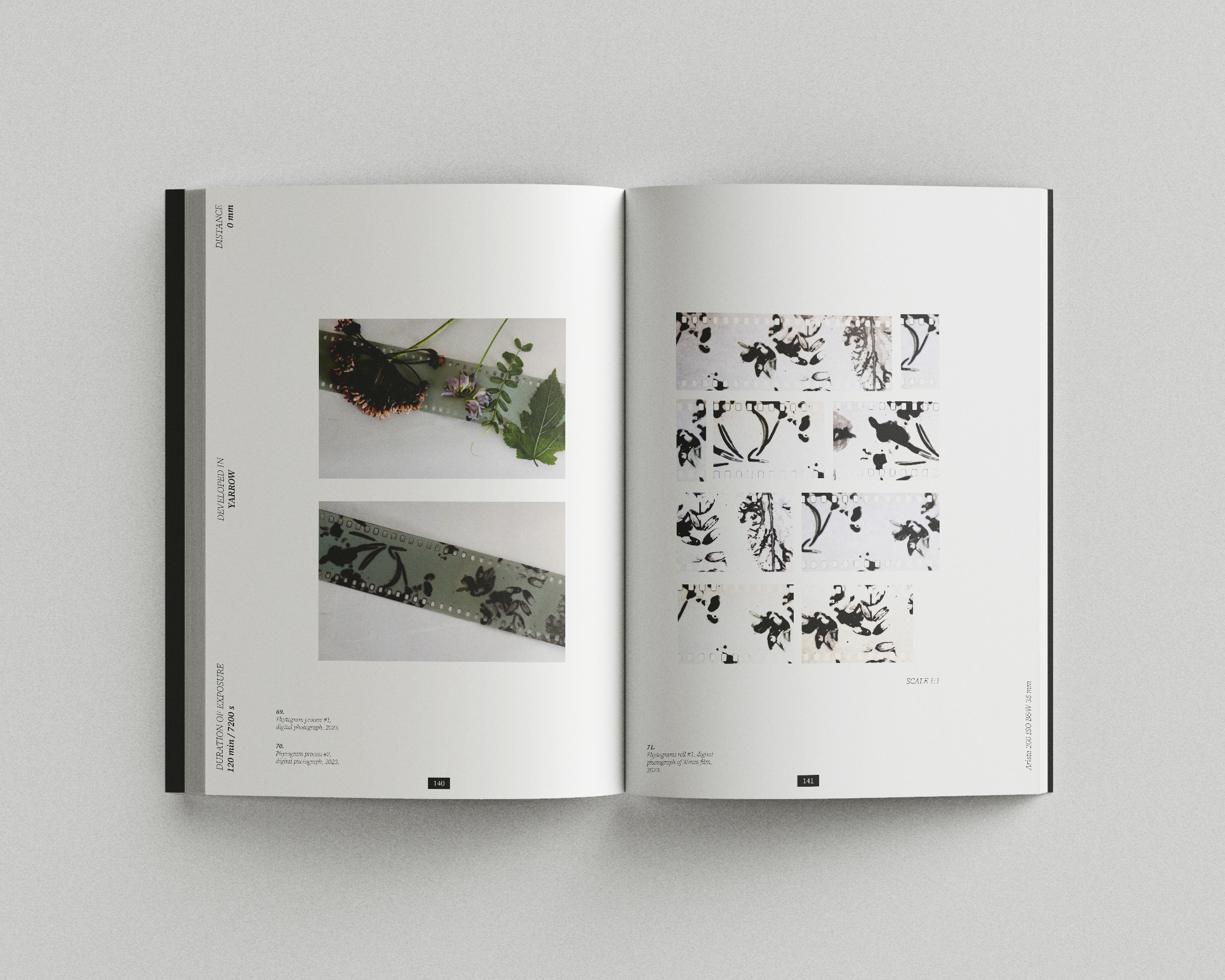
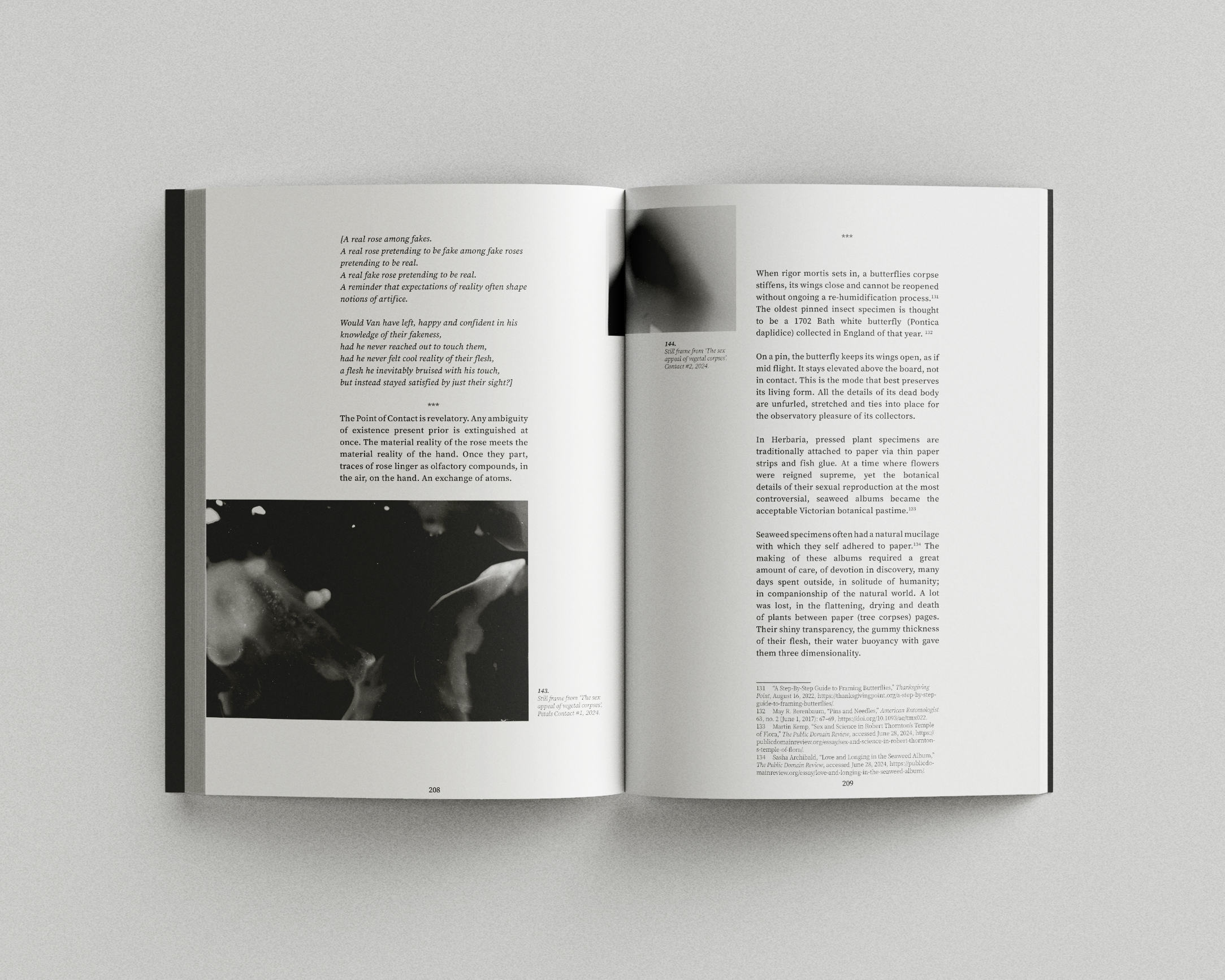
In the photographic process, an image is created when light reacts with a light sensitive surface. Silver halides are permanently converted to elemental silver, matter is changed by other non human matter; put in contact they create the repository of images central to this thesis: The Aesthetic of Contact.
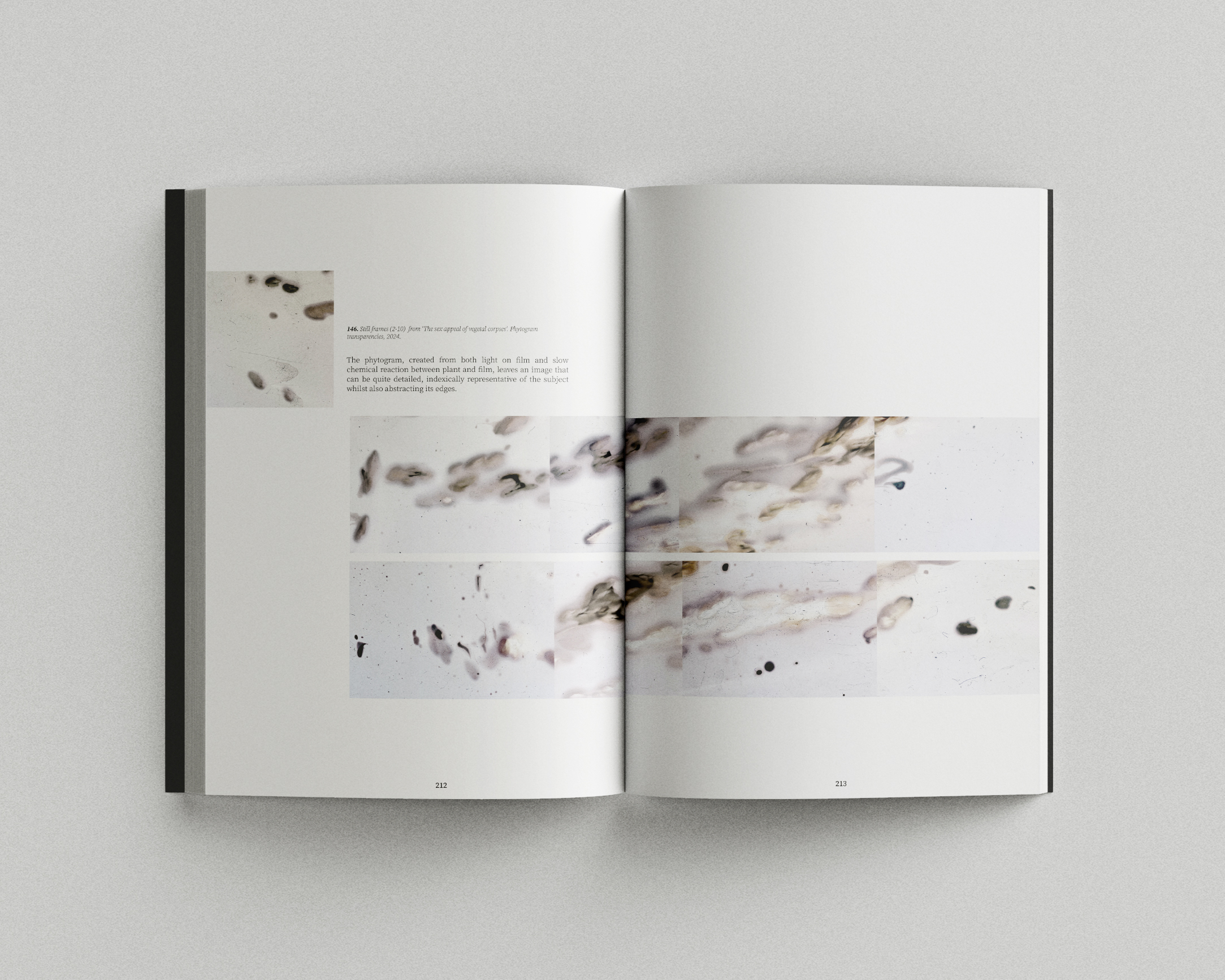
Not simply an image, the photograph, unlike painting or architectural drawing, shares more then just likeness to its subject; it is a part of, or an extension of its reality.I use camera-less and camera-using photography to curate a garden of images, not of ‘others’, but made in collaboration; autobiographies of the nonhuman.
I seek through them an (un)representation of green that does not come from my sight, nor from architecture’s primacy of vision; a way of seeing capable of awakening a fascination of greenness.
It was important to me, to avoid the rootedness of architectural sites, their boundaries and edges. I had a few options. I could center myself somewhere and in the way of Deleuze and Guattari, branch out from there, like a rhizome. I could create a mosaic of many places, in many times. Or I could focus on greenness, through its most obvious visual characteristic: the colour green. In doing so I could tie greenness to vision, and through vision to photography.
Before addressing how we live, how we build, how we act, how we exist, in place or on site, I needed to speak to how we viewed it. Ultimately, greenness, as proposed in this thesis, is an acknowledgment of the material relations that shape and link plant-life to their Umwelt*. This thesis is a statement on how‘green’ exists solely as color, which has rendered our understanding of it banal. This thesis is also a counterstatement; an exploration into the ways greenness can be re-envisioned beyond the semiotics of green.
ABSTRACT
We live in a world shrouded in greenness. A world made of places, of
places made of sites, of sites which make the landscape. I speak to all current and latent gardeners; to all of those unaware, yet fascinated by green.
Ultraviolet Gardens invites you into a photographic garden; a reframing of how ‘green’ has been, can be, seen and rediscovered; to find greenness within plastic plants, fuzzy chlorophyll, and the illusions of green.
Within ultraviolet gardens, the banal and mundane are estranged, and as such made visible. With film and photo making, I share the strange dimensions of greenness that arise in familiar places.
Central to the argument is that a rediscovery of green must happen first by estrangement of the body, of both the external optics of vision and the internal perceptions of the mind.
In the photographic process, an image is created when light reacts with a light sensitive surface. Silver halides are permanently converted to elemental silver, matter is changed by other non human matter; put in contact they create the repository of images central to this thesis: The Aesthetic of Contact.
Not simply an image, the photograph, unlike painting or architectural drawing, shares more then just likeness to its subject; it is a part of, or an extension of its reality.I use camera-less and camera-using photography to curate a garden of images, not of ‘others’, but made in collaboration; autobiographies of the nonhuman.
I seek through them an (un)representation of green that does not come from my sight, nor from architecture’s primacy of vision; a way of seeing capable of awakening a fascination of greenness.